Everyday Wisdom · Article
Who is Phra Phrom?
Researched and Compiled by Michele Cheng
Sun, 20 Sept 2026
Understanding the Four-Faced Deity in Thai Buddhist Tradition
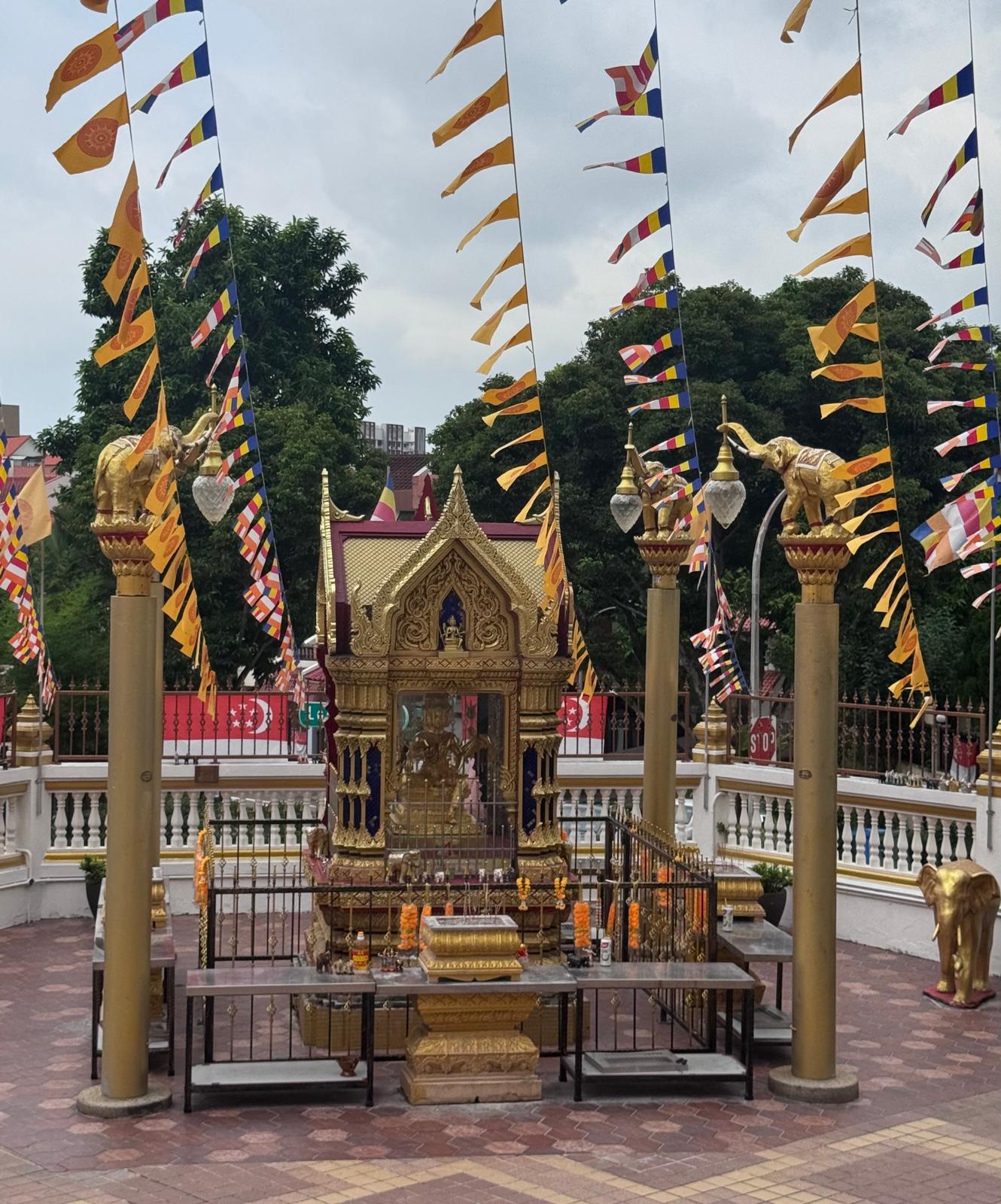
Many people first encounter Phra Phrom while travelling in Thailand or visiting a Thai Buddhist temple. They notice the four serene faces, the fragrance of incense, fresh flowers carefully placed before the shrine, and sometimes even traditional Thai dancers performing graceful movements nearby.
Almost everyone asks the same question.
“Who is Phra Phrom?”
It is a simple question, but the answer opens the door to centuries of history, culture and spiritual tradition.
More Than a Statue
For many devotees, Phra Phrom represents a place to pause.
Some come before starting a new chapter in life.
Some return to give thanks after overcoming a difficult period.
Others simply stand quietly for a few moments, finding a sense of peace amidst the busyness of daily life.
Although people arrive with different hopes and experiences, many leave with the same feeling — a renewed sense of gratitude and calm.
To understand why, we first need to understand who Phra Phrom is.
Who is Phra Phrom?
Phra Phrom is the Thai representation of Brahma, a revered deity whose origins can be traced back thousands of years to ancient India.
In Thailand, Phra Phrom has long been honoured as a symbol of wisdom, loving-kindness, compassion and impartiality.
His image is instantly recognisable by the four peaceful faces looking in different directions, reminding devotees of wisdom that sees beyond a single point of view.
Today, shrines dedicated to Phra Phrom can be found throughout Thailand and in Thai temples around the world, where people gather to pay their respects, offer thanks and make wholesome aspirations.
Is Phra Phrom a Buddha?
This is probably the question visitors ask most often.
Although many people casually refer to Him as the “Four-Faced Buddha,” this is not technically correct.
Phra Phrom is not a Buddha.
He is the Thai representation of Brahma.
The Buddha was an enlightened teacher who discovered and taught the path leading to the end of suffering.
Phra Phrom, on the other hand, is a revered deity whose place within Thai culture has developed over many centuries.
Understanding this distinction helps us appreciate both Buddhism and Thai cultural tradition more accurately.
Is Phra Phrom Part of Buddhism?
The answer is both simple and nuanced.
Devotion to Phra Phrom is not one of the core teachings of Buddhism.
The Buddha taught that lasting happiness arises through our own actions, ethical conduct, wisdom and the cultivation of the mind.
No deity can walk this path for us.
However, throughout history, Buddhism has lived alongside many different cultures. As Buddhism spread across Asia, local traditions naturally became part of religious life.
In Thailand, respect for Phra Phrom became one such tradition.
For many Thai Buddhists today, paying respect to Phra Phrom is not about replacing Buddhist practice. Rather, it is an expression of gratitude, humility and the aspiration to live with wisdom and compassion.
The two exist side by side, each serving a different role in the spiritual lives of many devotees.
Why Do So Many People Visit Phra Phrom?
People come for many different reasons.
Some visit before beginning a new business.
Some seek strength while caring for a loved one.
Some return simply to say thank you after recovering from illness or overcoming life's challenges.
Others come with no request at all.
They simply enjoy a few quiet moments away from the demands of work and everyday life.
What unites them is not what they ask for, but the spirit in which they come.
At its heart, paying respect to Phra Phrom is an opportunity to pause, reflect and remember the importance of gratitude.
Beyond Asking for Blessings
It is easy to assume that people visit Phra Phrom only to ask for good fortune.
Yet for many devotees, the deeper meaning lies elsewhere.
The visit becomes an opportunity to reflect on questions such as:
- Have I lived with kindness?
- Have I shown gratitude to those who have helped me?
- How can I become more compassionate, patient and wise?
These questions echo values that are deeply rooted in Buddhist practice.
The external rituals may differ, but the inner journey remains one of cultivating wholesome qualities that benefit both ourselves and those around us.
A Living Tradition
Today, millions of people continue to pay respect to Phra Phrom, not only in Thailand but also in many parts of the world.
Some come because it is a family tradition.
Some come because they appreciate Thai culture.
Others are simply curious.
Whatever brings someone to the shrine, the experience often becomes an invitation to slow down, breathe and reconnect with values that can easily be forgotten in modern life.
Perhaps this is why the tradition continues to resonate across generations.
It speaks to something timeless — our shared desire for wisdom, gratitude, compassion and peace.
If you would like to learn more
- The History of Phra Phrom
- Why Does Phra Phrom Have Four Faces?
- Understanding the Eight Sacred Objects
- The Meaning Behind Traditional Offerings
- Why Are Thai Dancers Part of the Celebration?
- How to Pay Respect to Phra Phrom